

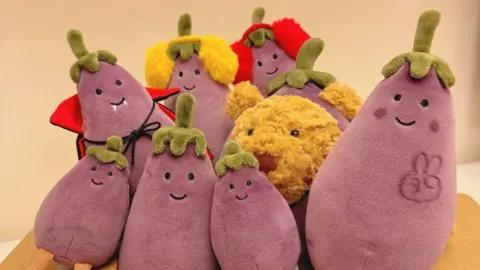
A woman named Stella bought her first Jellycat brand soft toy in the midst of a period of unemployment in the pandemic. Inspired by an acquaintance's passion for these UK-created toys, her interest was truly captured upon seeing an adorable gingerbread cottage design on a popular social networking app.
Although Christmas isn't widely celebrated across China, acting more as a retail occasion rather than a religious festival, the imagery of festive cottages appealed to Stella. "The festival doesn't mean a lot to me... But I always like the look of gingerbread houses," she explains. This prompted her to request an old friend in Guangzhou to buy the item on her behalf.
That acquisition was made back in 2021, coinciding with the brand was on the cusp to achieve massive popularity across China and internationally. "People were uneasy, and no-one knew what would happen," says Stella, who picked up a routine of stroking and squeezing her soft toys for comfort throughout a difficult period. Living in Beijing, which experienced among the most stringent restrictions in the world, she spent extended periods indoors.
Now 32 and working in sales manager in the tourism industry, Stella still grow her assortment. It has grown to around 120 items, with a total a cost of roughly 36,000 yuan. "As an adult, there are many things you can't discuss with others... and the problems we face are a lot more complicated than before," she says with a sigh. "The plushies assist me in regulate my emotions."
Initially marketed with kids in mind, these soft toys have evolved into an international phenomenon, especially in China where an increasingly disenchanted youth demographic is turning to them for emotional support.
Understanding the Adult Toy Enthusiasts
Stella's Gingerbread house plushie belongs to the "Amuseables" line, a set of characters featuring small expressions based on commonplace items, from bathroom tissue to boiled eggs. These plushies have become the "standout success" which "attract a wide Gen-Z and millennial demographic" globally, according to market observers.
Their growing popularity "may have something to do with a desire for a sense of connection," propose cultural commentators. It is difficult to ascertain whether the launch of the now-iconic Amuseable line back in 2018 was a deliberate move to engage the adult consumer, companies in the sector increasingly must find new markets amid declining fertility rates across numerous countries.
The brand made its foray into the Chinese market as early as 2015. Having laid significant "groundwork", the toy maker was well-positioned to tap into "the tone of the pandemic"—when individuals looked for comfort amid heightened anxiety—and built on this momentum there, as explained by industry experts.
Jellycat's fame was also boosted by engaging pop-up experiences. These retail activations often featured a selection of exclusive "culinary" themed items. Many enthusiasts would film themselves being served and share the clips on social platforms.
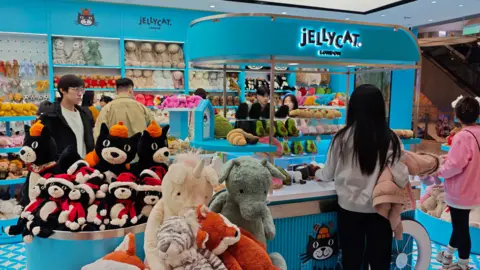
Adaptation to local tastes has also been an essential approach. As an example, customers were able to buy stuffed toy versions of classic UK dishes like fish and chips at a pop-up overseas. Meanwhile, products including teapot and teacup plushies were featured at special stores in Chinese metropolises the previous year.
In 2024, the UK-based company's sales is said to have increased by two-thirds to reach an impressive figure. In the same period, it sold an estimated $117 million in value of toys to Chinese consumers via leading e-commerce platforms, according to research data.
This growth reflects a broader boom within China's collectable-toy market among young adults in search of emotional comfort and connection. Overall sales from collectible items nationally are expected to top 110 billion yuan this year, according to a recent analysis.
The remarkable success of brands like Labubu, elf-like figures by Chinese toy maker Pop Mart, underscores the market's increasing appetite towards designer collectibles. This "adult-child" phenomenon is not exclusive to China; adults globally are increasingly question "outdated understandings of adulthood," note academics.
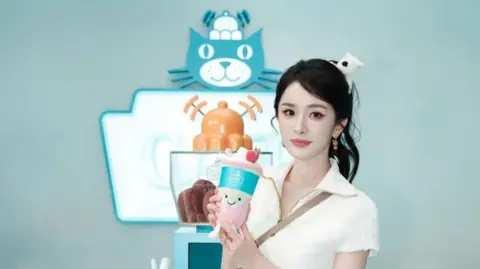
Amuseables, items like the aubergine plushie—nicknamed "the big boss" in China—have spawned numerous memes, with many expressing frustrations regarding adult life. The "eggplant boss" tag is a space where fans draw various emotive faces on the plushie, depicting it in different states enjoying a drink to fake-smiling.
For example, a marketing professional from Hong Kong, Wendy Hui, modified her eggplant Amuseable adding dark circles under its eyes and placing spectacles on it. She posted an image online with the caption: "The mood of workers at the start of the week." "I kept working at home even during my days off," she explains. "I merely intended to convey the level of exhaustion I felt."
Thus, the brand has emerged as an unexpected, whimsical channel for young Chinese to air their grievances over economic challenges, in which hard work doesn't always guarantee commensurate rewards. Amid strict content regulation, digital spaces have become an important, if not the only, space for these types of conversations.
The brand's regular launches of limited-edition products coupled with the discontinuation of certain lines—a strategy often called "scarcity marketing" in China—has also driven {


